

Quick answer
Wool is a natural fibre and needs more careful treatment than many synthetic carpets. The cleaning product, dilution, pH, temperature, moisture level and amount of agitation all need to be appropriate for the carpet. Using the wrong chemistry or cleaning method can sometimes leave a carpet looking clean immediately after treatment while still causing lasting damage to the fibre or colour.
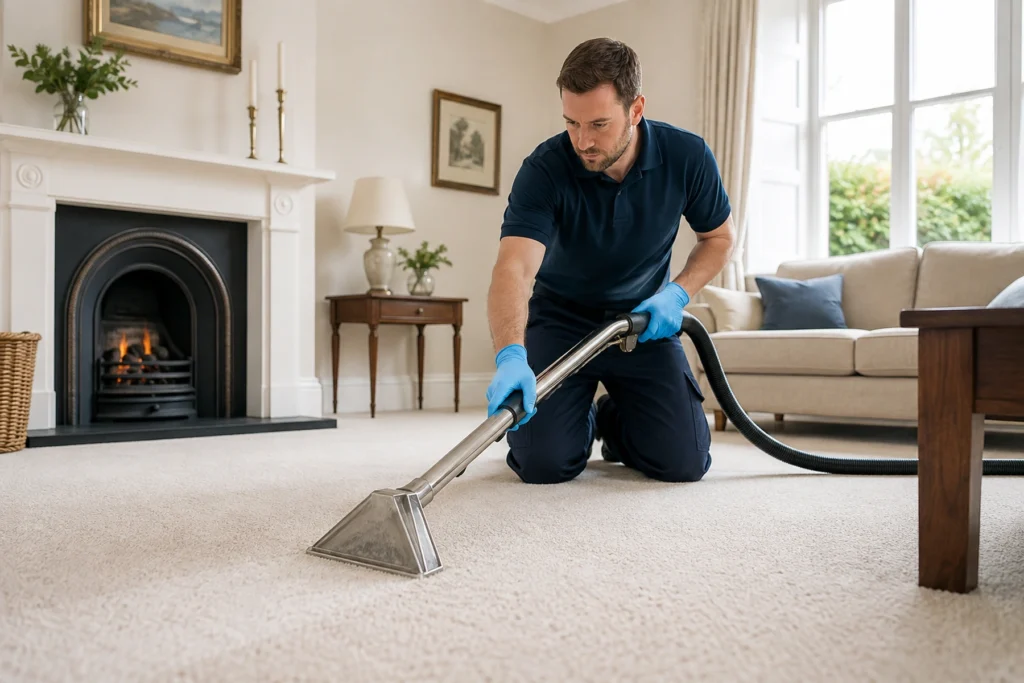
This is why professional carpet cleaning for wool is not simply about using a powerful machine or a stronger detergent. The carpet needs to be assessed first so that the cleaning process can be selected around its fibre, construction, condition and level of soiling.
Why Does Wool Carpet Need Different Care?
Wool behaves differently from many synthetic carpet fibres. As a natural protein fibre, it can be affected by unsuitable chemistry, excessive heat, uncontrolled moisture and aggressive mechanical action. These factors need to be considered before cleaning begins rather than corrected after something has already gone wrong.
The construction of the carpet matters as well. Two carpets may both contain wool but have different backing systems, fibre blends, dyes and pile structures. A process that works perfectly well on a robust synthetic carpet may therefore be too aggressive for a wool or wool-rich carpet.
Professional cleaning should take account of the carpet itself as well as the visible soil. Existing stains, wear, previous treatments and the general condition of the fibres can all influence how the carpet should be cleaned safely.
Are Exact Clean’s Products Safe for Wool Carpets?
Yes. Products selected for wool carpets are wool-safe and used at an appropriate dilution and pH.
Choosing the correct product is only part of the process. How much product is used, how it is applied, how long it remains in contact with the carpet and how thoroughly it is extracted all matter afterwards.
Using more chemical does not automatically create a better result. Over-concentrating a cleaning solution can leave residue behind, increase the risk of fibre or colour problems and encourage the carpet to soil again more quickly after cleaning.
The aim is therefore not to use the strongest chemistry available. It is to use the correct chemistry for the carpet and for the contamination being treated.
Why Does pH Matter When Cleaning Wool?
pH describes how acidic or alkaline a cleaning solution is. This is particularly important with wool because inappropriate chemistry can affect the fibre and its dyes.
A product labelled as a general carpet cleaner is not automatically suitable for every carpet. The cleaner needs to understand whether the chemistry is appropriate for wool, whether the dilution is correct and how it interacts with the rest of the cleaning process.
There is an industry saying that explains this well:
“Perfectly cleaned, perfectly ruined.”
A carpet can sometimes look exceptionally clean straight after treatment while inappropriate chemistry or an overly aggressive process has already caused permanent damage.
A good result should therefore never be judged only by how bright the carpet appears while it is still damp.
Why Are Wool Carpet Stains More Complicated?
A visible mark on a wool carpet is not always simply dirt sitting on the surface. Sometimes the problem is contamination that can potentially be removed. In other cases, the substance itself or a previous cleaning attempt may have chemically changed the colour of the wool.
This distinction matters.
If the problem is contamination, professional stain treatment may be able to break it down and extract it. If the dye or fibre has already been altered, removing further contamination will not necessarily restore the original colour.
This is one reason we ask what caused a stain and what has already been used on it. Previous DIY treatment can significantly affect what happens next.
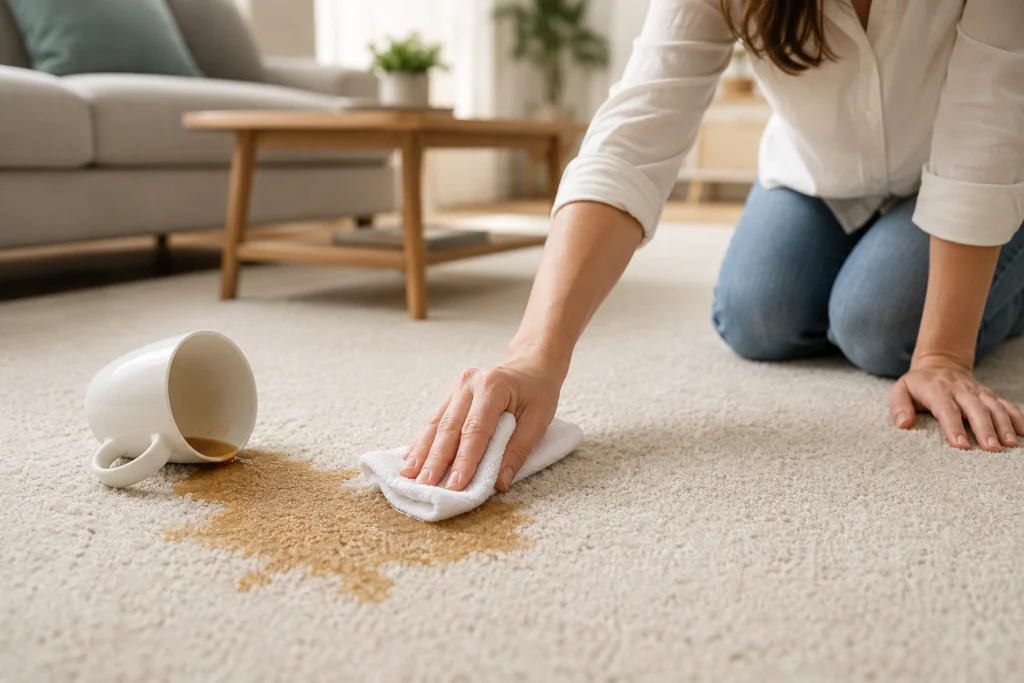
If you have just spilt something on a wool carpet, our guide on what to do when you spill something on your carpet explains the safest immediate response.
Why Can Supermarket Stain Removers Be Risky?
Many homeowners understandably reach for a stain remover when something is spilt. The difficulty is that these products are designed for different types of contamination and may contain chemistry that is unsuitable for some wool carpets.
Oxidising products are a particular concern. Depending on the carpet, the product and the way it is used, an oxidising treatment may alter the carpet’s colour rather than simply remove the contamination. This can leave a patch looking lighter, brighter or bleached.
Once the colour of the carpet fibre itself has changed, the problem is no longer an ordinary stain that can simply be extracted.
For that reason, our general advice with a fresh spill on wool is to blot carefully, remove as much contamination as possible and avoid repeatedly experimenting with different household cleaning products.
Why Can Scrubbing Damage Wool?
Scrubbing is another common response to carpet stains, but aggressive rubbing can create more problems than it solves.
Wool fibres have a natural scale-like surface. Excessive agitation, particularly when combined with unsuitable chemistry, heat or moisture, can affect the way the carpet looks and feels. Rubbing can also spread the contamination, work it further into the pile and leave the treated area looking rougher or more distorted than the surrounding carpet.
Professional stain treatment relies on appropriate chemistry, controlled agitation where necessary and effective extraction rather than force.
Why Does Moisture Control Matter?
Wool carpets can be professionally wet cleaned, but that does not mean they should be unnecessarily saturated.
Moisture needs to be introduced and recovered in a controlled way. Excessive moisture can lengthen drying times and, depending on the construction of the carpet, may contribute to discolouration, odours or backing-related problems.
This is where professional extraction equipment and technique become important. Effective carpet cleaning is not simply about how much water can be put into a carpet. The ability to recover that moisture, suspended soil and cleaning solution afterwards is just as important.
Our guide comparing truck-mounted carpet cleaning with hire machines explains this relationship between cleaning action and extraction in more detail.
What About Wool-Synthetic Blend Carpets?
Not every carpet containing wool is made from 100% wool. Many carpets use a blend of fibres, combining wool with synthetic materials.
The presence of synthetic fibre does not mean the wool component can simply be ignored. The cleaning process still needs to take account of the most sensitive elements of the carpet, together with its dyes, backing and overall construction.
Correct fibre identification therefore matters even when a carpet does not initially appear particularly delicate.
Why Does Professional Training Matter?
Professional carpet cleaning involves much more than applying a product and extracting it again. The cleaner needs to understand how different fibres and constructions respond to chemistry, pH, water, temperature, agitation and stain treatments.
Different stains also require different approaches. Protein-based contamination, tannins, oils, dyes and other substances do not all respond to the same treatment.
Just as importantly, a trained cleaner needs to recognise when further treatment could create more risk than benefit.
Exact Clean’s work is supported by extensive professional training in the UK with respected industry specialists including Paul Pearce, Julie Roberts and Ken Wainwright, together with years of practical cleaning experience. You can read more about our professional background on the Exact Clean qualifications page.
That experience allows the cleaning process to be selected around each individual carpet rather than applying the same method to every job.
What Happens Before a Wool Carpet Is Professionally Cleaned?
Professional cleaning should begin with assessment rather than immediately applying products.
The carpet fibre, construction and overall condition are considered first, together with traffic areas, spots, stains and signs of previous cleaning attempts. Areas that need specialist stain treatment can then be considered separately from general soil removal.
The most appropriate products, amount of moisture and cleaning method can then be selected with the carpet itself in mind.
This approach reduces unnecessary risk and helps establish realistic expectations before cleaning begins.
Can Every Stain Be Removed From Wool Carpet?
No professional cleaner should guarantee that every stain can be completely removed.
The result depends on what caused the stain, how long it has been present, whether the dye has already been affected and what treatments have previously been attempted.
Some marks respond extremely well to professional treatment. Others may improve substantially without disappearing completely. In some cases, what appears to be staining is actually permanent colour loss or fibre damage.
Identifying that difference is an important part of professional stain assessment.
What Does a Safe Professional Result Look Like?
A good wool carpet cleaning result is not simply a carpet that looks brighter.
The process should also respect the carpet’s fibre, colour, backing and construction. Appropriate chemistry should be used, moisture should be controlled and cleaning residues should be extracted effectively.
For wool in particular, the objective is straightforward: achieve the best cleaning result possible without compromising the carpet itself.
If your wool carpet needs professional attention, you can find more information about Exact Clean’s carpet cleaning service.
Frequently Asked Questions
Are your carpet cleaning products safe for wool?
Yes. Products selected for wool carpets are wool-safe and used at the appropriate dilution and pH for the carpet being treated.
Why is high-pH chemistry a concern on wool?
Wool is sensitive to inappropriate chemistry. Excessively alkaline products can affect the fibre and may cause permanent changes to its appearance, feel or colour.
Can wool carpets be wet cleaned?
Yes. Many wool carpets can be professionally wet cleaned. The important factors are using appropriate products, controlling moisture and recovering the cleaning solution effectively rather than unnecessarily saturating the carpet.
Why should I avoid scrubbing a stain on wool?
Aggressive rubbing can spread contamination, distort the pile and affect the surface of the wool fibre. Careful blotting is generally a safer first response to a fresh spill.
Can supermarket stain remover bleach a wool carpet?
Some stain removers contain chemistry that can alter carpet dyes or fibres. If the colour has been chemically changed, removing the original contamination may not restore the carpet to its previous appearance.
Why does professional training matter for wool carpet cleaning?
Because fibre type, carpet construction, pH, moisture, chemistry, staining and agitation all influence how a wool carpet should be cleaned safely.
Need Professional Wool Carpet Cleaning?
If you have a wool carpet that needs cleaning or you are concerned about staining, previous DIY treatment or the safest cleaning method to use, Exact Clean can assess the carpet and recommend the most appropriate next step.
You can get a free carpet cleaning quote or contact Exact Clean if you would like advice before booking.